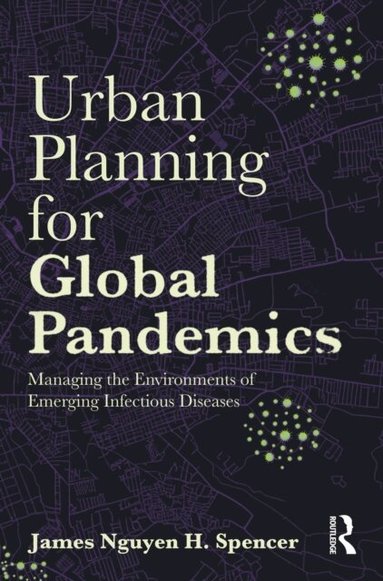
Urban Planning for Global Pandemics
Dubbelkollat idag
Jämför 1 butik
- Bokus, 785 kr, frakt enligt butiken. Till butik (öppnas i ny flik)
I lagerFrakt: se butikenDubbelkollad 09:51
785 kr
Lägst

Priser från butikernas flöden kan ha ändrats: det är priset hos butiken som gäller, så kontrollera det innan du handlar.
Prishistorik
Köp nu eller vänta?
Just nu kostar produkten 785 kr — 17 kr över det lägsta vi sett på 2 veckor.
Pris idag
785 kr
- Lägst
- 768 kr
- Snitt
- 773 kr
- Högst
- 785 kr
| 2026-10-01 | 768 kr · Lägst hos Bokus |
|---|---|
| 2026-10-13 | 785 kr · Lägst hos Bokus |
Om produkten
Urban Planning for Global Pandemics
Läs merLäs mindre
By taking an ecosystem approach to emerging infectious diseases (EIDs), this book gathers the scientific evidence outlining the origins of EIDs to show how a landscape-based ecosystem approach can lead to policy alternatives that draw on the expertise of planning for future pandemic prevention and management.Global EIDs are one of the world's fastest-growing challenges to local health and are often able to cross large distances. The book targets the substantial "e;unknowns"e; surrounding these dangerous characteristics and outlines how current debates about pandemics overlook important characteristics of both the microscopic evolution of viruses themselves, and the social and economic systems through which they move from localized outbreak to global pandemic. Using accessible language, it highlights how planners can help advance and shape policy directions; and how investments in technologies, people, and institutions can be beneficial. Chapters emphasize the importance of creating methods of analysis able to detail very-long-term risks, and therefore suggest actionable and affordable preventative planning today for pandemics predicted decades from now. In doing so, they detail how the intersection of two planning fields of expertise - land use planning and transportation planning - can be enlisted in the fight against future pandemic risk.Summarizing evidence from past pandemics and using case examples, this book provides future planners with innovative ideas to help the field efficiently understand core health ideas that align with planning expertise. This book is essential for graduate students in urban planning and public health courses, as well as all built environment professionals and practitioners tasked with reducing the risks of the next pandemic.