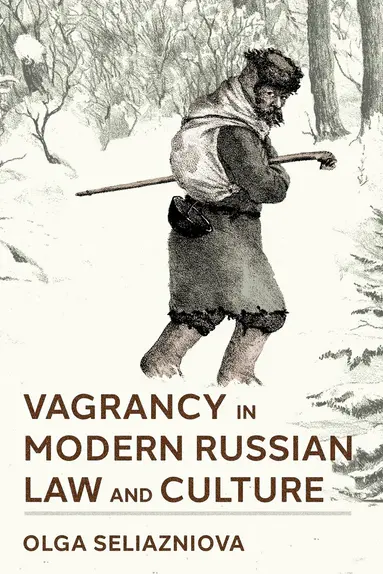
Vagrancy in Modern Russian Law and Culture
1 885 krhos Bokus · exkl. frakt
564 kr skillnad mellan billigaste och dyraste butik i lager
Dubbelkollat idag
Jämför 2 butiker
- Bokus, 1 885 kr, frakt enligt butiken. Till butik (öppnas i ny flik)
I lagerFrakt: se butikenDubbelkollad 13:51
1 885 kr
Lägst
- Akademibokhandeln, 2 449 kr, frakt enligt butiken. Till butik (öppnas i ny flik)
I lagerFrakt: se butikenDubbelkollad 13:53
2 449 kr

Priser från butikernas flöden kan ha ändrats: det är priset hos butiken som gäller, så kontrollera det innan du handlar.
Prishistorik
Köp nu eller vänta?
Just nu kostar produkten 1 885 kr — 14 kr över det lägsta vi sett på 1 månad.
Under den tiden har det oftast legat runt 1 900–2 550 kr.
Pris idag
1 885 kr
- Lägst
- 1 871 kr
- Snitt
- 2 333 kr
- Högst
- 2 649 kr
| 2026-09-15 | 2 547 kr · Lägst hos Bokus |
|---|---|
| 2026-10-13 | 2 649 kr · Lägst hos Bokus |
| 2026-10-16 | 2 479 kr · Lägst hos Akademibokhandeln |
| 2026-10-17 | 1 910 kr · Lägst hos Bokus |
| 2026-10-18 | 1 874 kr · Lägst hos Bokus |
| 2026-10-22 | 1 871 kr · Lägst hos Bokus |
| 2026-10-24 | 1 896 kr · Lägst hos Bokus |
| 2026-10-27 | 1 899 kr · Lägst hos Bokus |
| 2026-10-28 | 1 904 kr · Lägst hos Bokus |
| 2026-10-29 | 1 903 kr · Lägst hos Bokus |
| 2026-11-01 | 1 885 kr · Lägst hos Bokus |
Om produkten
Vagrancy in Modern Russian Law and Culture
Läs merLäs mindre
Vagrancy in Modern Russian Law and Culture examines vagrancy in imperial Russia and the Soviet Union as a historical, legal, and cultural phenomenon. Beginning with vagrancy laws, Olga Seliazniova traces the rich cultural use of vagabondism that permeated nineteenth-century Russian and Soviet literature and art. Seliazniova analyzes laws, literary texts, paintings, and films, arguing that vagrant stories produced in the nineteenth century had a long-lasting impact on culture and were instrumental in shaping collective views on poverty, freedom, and mobility that persist in Russia today.Historically, vagrancy in Russia was a serious criminal offense, as hundreds of legal decrees and hundreds of thousands of convicted vagrants prove. Seliazniova discusses why vagrants sparked Russian writers' interest and how representations of vagrants evolved over the nineteenth century. The Soviets claimed they eradicated vagrancy, but they simply renamed it and covertly continued arresting people. Vagrancy in Modern Russian Law and Culture shows how one country, despite the changes of its government through the centuries, consistently profited from the poor, using unhoused itinerant people as free laborers and soldiers.