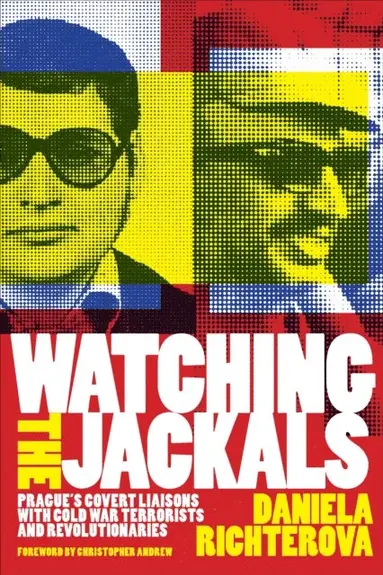
Watching the Jackals
Dubbelkollat idag
Jämför 1 butik
- Bokus, 537 kr, frakt enligt butiken. Till butik (öppnas i ny flik)
I lagerFrakt: se butikenDubbelkollad 01:51
537 kr
Lägst

Priser från butikernas flöden kan ha ändrats: det är priset hos butiken som gäller, så kontrollera det innan du handlar.
Prishistorik
Köp nu eller vänta?
Just nu kostar produkten 537 kr — 11 kr över det lägsta vi sett på 1 månad.
Pris idag
537 kr
- Lägst
- 526 kr
- Snitt
- 532 kr
- Högst
- 537 kr
| 2026-09-15 | 526 kr · Lägst hos Bokus |
|---|---|
| 2026-10-06 | 537 kr · Lägst hos Bokus |
Om produkten
Watching the Jackals
Läs merLäs mindre
The untold history of Czechoslovakia''s complex relations with Middle Eastern terrorists and revolutionaries during the closing decades of the Cold WarIn the 1970s and 1980s, Prague became a favorite destination for the world''s most prominent terrorists and revolutionaries. They arrived here to seek refuge, enjoy recreation, or hold secret meetings aimed at securing training, arms, and other forms of support. While some were welcome with open arms, others were closely watched and were eventually ousted.Watching the Jackals is the untold history of Czechoslovakia''s complex relations with Middle Eastern terrorists and revolutionaries during the closing decades of the Cold War. Based on recently declassified intelligence files, Richterova unveils the story of Prague''s engagement with various factions of the Palestine Liberation Organization, along with some of the era''s most infamous terrorists, including Carlos the Jackal, the Munich Olympics massacre commander Abu Daoud, and the Abu Nidal Organization. In this gripping account, Richterova explains why "Cold War Jackals" gravitated toward Prague and how the country''s leaders reacted to their visits, and she uncovers the role Czechoslovakia''s security and intelligence apparatus - the StB (Státní bezpečnost) played in these, at times, dangerous liaisons.Drawing on interviews and remarkably detailed records from the former Czechoslovakia (now the Czech Republic and the Slovak Republic), Richterova offers readers interested in the intelligence world a fascinating account of how states use their spies to pursue covert policies with violent nonstate actors. The book also introduces new evidence and nuances into old debates about whether the Communist Bloc supported terrorism.