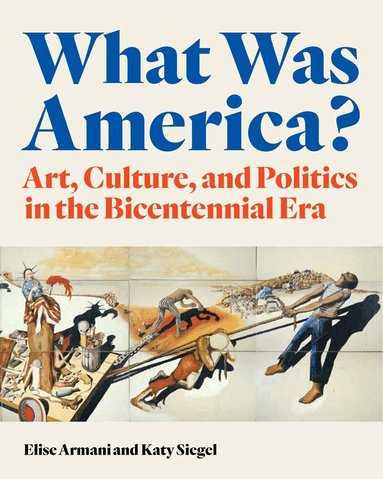
What Was America?
661 krhos Bokus · exkl. frakt
198 kr skillnad mellan billigaste och dyraste butik i lager
Dubbelkollat idag
Jämför 2 butiker
- Bokus, 661 kr, frakt enligt butiken. Till butik (öppnas i ny flik)
I lagerFrakt: se butikenDubbelkollad 08:51
661 kr
Lägst
- Akademibokhandeln, 859 kr, frakt enligt butiken. Till butik (öppnas i ny flik)
I lagerFrakt: se butikenDubbelkollad 07:53
859 kr

Priser från butikernas flöden kan ha ändrats: det är priset hos butiken som gäller, så kontrollera det innan du handlar.
Prishistorik
Köp nu eller vänta?
Pris idag
661 kr
- Lägst
- 661 kr
- Snitt
- 665 kr
- Högst
- 675 kr
| 2026-10-05 | 662 kr · Lägst hos Bokus |
|---|---|
| 2026-10-07 | 675 kr · Lägst hos Bokus |
| 2026-10-09 | 666 kr · Lägst hos Bokus |
| 2026-10-11 | 664 kr · Lägst hos Bokus |
| 2026-10-13 | 661 kr · Lägst hos Bokus |
| 2026-10-16 | 663 kr · Lägst hos Bokus |
| 2026-10-17 | 661 kr · Lägst hos Bokus |
Om produkten
What Was America?
Läs merLäs mindre
A fascinating account of the art of the US Bicentennial, offering wide-ranging perspectives on debates about national identity and history that remain pressing todayIn 1976 the United States celebrated its two hundredth year with festivals, exhibitions, works of art, and historical initiatives. Over a decade, planning for the Bicentennial spanned postwar prosperity, political activism, and, toward the end, fear of national decline. The social alchemy of these conditions produced a national investment in shared cultural experience never matched before or since.Across wildly disparate venues, demographics, interests, presidencies, and geographies, Bicentennial cultural production contended with community, the environment, immigration, heritage, technology, and what it meant to be American. This outpouring of projects both reflected and drove national debates, eliciting mass participation in negotiating US history and imagining the nation's future.What Was America? offers a prismatic view of American art and culture in the years leading up to 1976. Ten fascinating case studies examine the individual efforts of artists such as Benny Andrews; blockbuster exhibitions, including A Nation of Nations at the Smithsonian; and popular community projects such as protest quilts and time capsules. The authors consider issues that remain highly relevant today and offer new perspectives on the possibilities for art's social role, exploring its use in defining the nation's past and future, its purpose and its people.