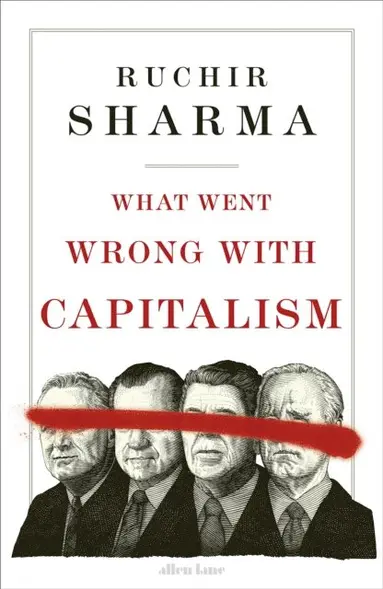
What Went Wrong With Capitalism
Dubbelkollade priser
Jämför 2 butiker
- Bokus, 125 kr, frakt enligt butiken. Till butik (öppnas i ny flik)
I lagerFrakt: se butikenDubbelkollad 02:51
125 kr
Lägst
- Adlibris, 124 kr plus 35 kr frakt. Till butik (öppnas i ny flik)
Slut i lagerFrakt 35 krDubbelkollad 27 okt. 09:10
124 kr


Priser från butikernas flöden kan ha ändrats: det är priset hos butiken som gäller, så kontrollera det innan du handlar.
Prishistorik
Köp nu eller vänta?
Just nu kostar produkten 125 kr — 3 kr över det lägsta vi sett på 1 månad.
Under den tiden har det oftast legat runt 120 kr.
Pris idag
125 kr
- Lägst
- 122 kr
- Snitt
- 123 kr
- Högst
- 125 kr
| 2026-09-15 | 122 kr · Lägst hos Bokus |
|---|---|
| 2026-10-06 | 125 kr · Lägst hos Bokus |
| 2026-10-08 | 124 kr · Lägst hos Adlibris |
| 2026-10-26 | 125 kr · Lägst hos Bokus |
Om produkten
What Went Wrong With Capitalism
Läs merLäs mindre
*A Financial Times and Wall Street Journal Book of the Year*'My book of the year' Alex Bastani, Novara Media; Tom Keene, Bloomberg'Brilliant ... deeply arresting' Lewis Goodall, The News Agents PodcastA radical examination by a leading financial analyst, commentator and investor of the ills of capitalism and how they can be fixedWhat went wrong with capitalism? Ruchir Sharma's explanation is unlike any you have heard before. Progressives are partly right when they mock modern capitalism as "socialism for the rich," but what really happened in recent decades is that government in developed nations expanded in just about every measurable dimension, from spending and regulation to the sheer scale of its rescues each time the economy wobbled. The result, Sharma says, is "socialized risk," expensive government guarantees, for everyone-welfare for the poor, entitlements for the middle class, and bailouts for the rich.Voters say they are disillusioned with capitalism, but a system so distorted by government interventions is a dysfunctional version of free market ideals. As a result, productivity and economic growth have slowed sharply, shrinking the pie for everyone and stoking popular anger. Since these flaws developed as the government expanded, building an even bigger state will only double down on what's gone wrong. The answer Sharma offers is a series of seven fixes to restore the balance between state support and free markets and lay the path to a more prosperous and happier future.