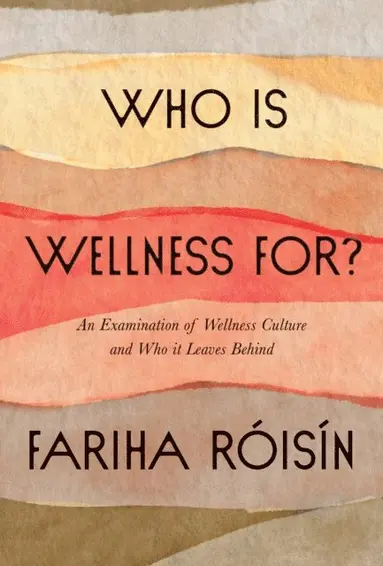
Who Is Wellness For?
Dubbelkollat idag
Jämför 1 butik
- Bokus, 251 kr, frakt enligt butiken. Till butik (öppnas i ny flik)
I lagerFrakt: se butikenDubbelkollad 00:51
251 kr
Lägst

Priser från butikernas flöden kan ha ändrats: det är priset hos butiken som gäller, så kontrollera det innan du handlar.
Prishistorik
Köp nu eller vänta?
Just nu kostar produkten 251 kr — 6 kr över det lägsta vi sett på 1 månad.
Pris idag
251 kr
- Lägst
- 245 kr
- Snitt
- 247 kr
- Högst
- 251 kr
| 2026-09-15 | 245 kr · Lägst hos Bokus |
|---|---|
| 2026-10-13 | 251 kr · Lägst hos Bokus |
Om produkten
Who Is Wellness For?
Läs merLäs mindre
The multi-disciplinary artist and author of Like a Bird and How to Cure a Ghost explores the commodification and appropriation of wellness through the lens of social justice, providing resources to help anyone participate in self-care, regardless of race, identity, socioeconomic status or able-bodiedness.Growing up in Australia, Fariha Risn, a Bangladeshi Muslim, struggled to fit in. In attempts to assimilate, she distanced herself from her South Asian heritage and identity. Years later, living in the United States, she realized that the customs, practices, and even food of her native culture that had once made her differenteverything from ashwagandha to prayerwere now being homogenized and marketed for good health, often at a premium by white people to white people.In this thought-provoking book, part memoir, part journalistic investigation, the acclaimed writer and poet explores the way in which the progressive health industry has appropriated and commodified global healing traditions. She reveals how wellness culture has become a luxury good built on the wisdom of Black, brown, and Indigenous peoplewhile ignoring and excluding them.Who Is Wellness For? is divided into four sections, beginning with The Mind, in which Fariha examines the art of meditation and the importance of intuition. In part two, The Body, she investigates the physiology of trauma, detailing her own journey with fatphobia and gender dysmorphia, as well as her own chronic illness. In part three, Self-Care, she argues against the self-care industrial complex but cautious us against abandoning care completely and offers practical advice. She ends with Justice, arguing that if we truly want to be well, we must be invested in everyones well being and shift toward nurturance culture.Deeply intimate and revelatory, Who Is Wellness For? forces us to confront the imbalance in health and healing and carves a path towards self-care that is inclusionary for all.