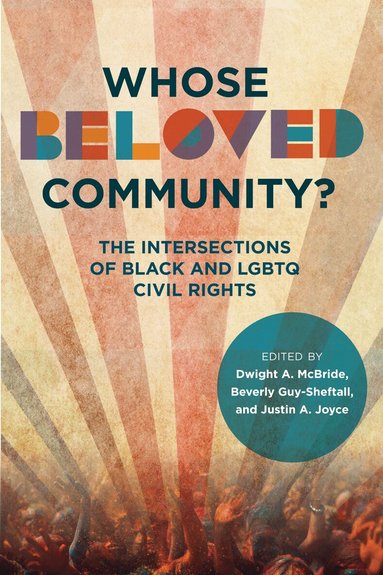
Whose Beloved Community?
1 407 krhos Bokus · exkl. frakt
422 kr skillnad mellan billigaste och dyraste butik i lager
Dubbelkollat idag
Jämför 2 butiker
- Bokus, 1 407 kr, frakt enligt butiken. Till butik (öppnas i ny flik)
I lagerFrakt: se butikenDubbelkollad 19:51
1 407 kr
Lägst
- Akademibokhandeln, 1 829 kr, frakt enligt butiken. Till butik (öppnas i ny flik)
I lagerFrakt: se butikenDubbelkollad 19:53
1 829 kr

Priser från butikernas flöden kan ha ändrats: det är priset hos butiken som gäller, så kontrollera det innan du handlar.
Prishistorik
Köp nu eller vänta?
Just nu kostar produkten 1 407 kr — 14 kr över det lägsta vi sett på 2 veckor.
Under den tiden har det oftast legat runt 1 400–1 410 kr.
Pris idag
1 407 kr
- Lägst
- 1 393 kr
- Snitt
- 1 405 kr
- Högst
- 1 413 kr
| 2026-09-28 | 1 393 kr · Lägst hos Bokus |
|---|---|
| 2026-09-30 | 1 395 kr · Lägst hos Bokus |
| 2026-10-02 | 1 404 kr · Lägst hos Bokus |
| 2026-10-03 | 1 405 kr · Lägst hos Bokus |
| 2026-10-05 | 1 412 kr · Lägst hos Bokus |
| 2026-10-07 | 1 413 kr · Lägst hos Bokus |
| 2026-10-10 | 1 411 kr · Lägst hos Bokus |
| 2026-10-11 | 1 406 kr · Lägst hos Bokus |
| 2026-10-13 | 1 402 kr · Lägst hos Bokus |
| 2026-10-16 | 1 407 kr · Lägst hos Bokus |
Om produkten
Whose Beloved Community?
Läs merLäs mindre
Martin Luther King Jr.'s idea of "the beloved community" focused on the hoped-for new relationship between the oppressor and the oppressed after the success of a nonviolent movement. But the vision excluded, and sometimes still excludes, LGBTQIA people and Black women.The editors curate essays that see beloved community as a generous space that centers justice. Taking inspiration from the radical moral vision of figures like Bayard Rustin and Audre Lorde, the contributors look at how Black queer, feminist, and trans thought and practice can cultivate belonging across lines of race, gender, sexuality, class, and region. Essayists use a variety of disciplinary and methodological perspectives that includes archival recovery, institutional critique, cultural analysis, ethnography, and political theory. The contributors define beloved community for themselves while offering entry points-through art, culture, activism, policy, pedagogy, and theory-for exploring what it means to belong, to resist, and to build.Expansive and interdisciplinary, Whose Beloved Community? begins the process of advancing toward truly inclusive communities that are more honest, more complex, and more loving.