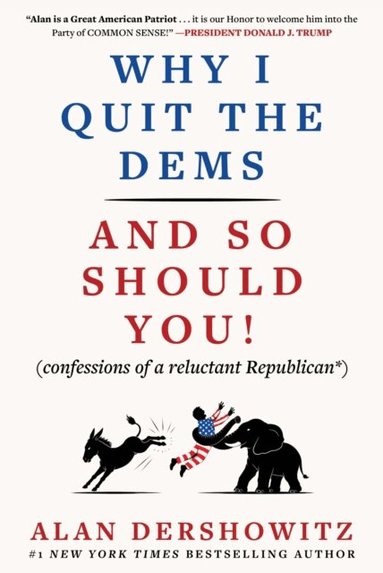
Why I Quit the Dems
Dubbelkollat idag
Jämför 1 butik
- Bokus, 226 kr, frakt enligt butiken. Till butik (öppnas i ny flik)
I lagerFrakt: se butikenDubbelkollad 18:51
226 kr
Lägst

Priser från butikernas flöden kan ha ändrats: det är priset hos butiken som gäller, så kontrollera det innan du handlar.
Prishistorik
Köp nu eller vänta?
Just nu kostar produkten 226 kr — 4 kr över det lägsta vi sett på 2 veckor.
Pris idag
226 kr
- Lägst
- 222 kr
- Snitt
- 224 kr
- Högst
- 226 kr
| 2026-10-01 | 222 kr · Lägst hos Bokus |
|---|---|
| 2026-10-10 | 226 kr · Lägst hos Bokus |
Om produkten
Why I Quit the Dems
Läs merLäs mindre
How Radical Democrats Drove Dershowitz to Become a Reluctant RepublicanFor nearly seventy years, Alan Dershowitz remained a loyal Democratuntil, in his view, the party abandoned its centrist foundations and embraced radical hostility toward Israel. Reluctantly, he aligned himself with the Republican Party despite continuing disagreements with parts of its domestic agenda. In an era marked by deepening division and ideological extremism, his overriding concern became preventing the rise of politicians and movements he believes threaten democratic institutions and civic stability.He observed for years what he saw as a growing shift toward left-wing extremism, particularly on university campuses, and sought to challenge it from within the Democratic Party as a loyal dissenter. But after October 7, 2023, Dershowitz concluded that the transformation of the party had become irreversibleespecially regarding Israel and its supporters. Remaining affiliated with a movement he believes now tolerates or promotes ideological extremism, he argues, would betray principles he has upheld throughout his life.Yet his political break is neither simple nor absolute. Alan continues to support many traditionally liberal positions, including reproductive choice, gay rights, environmental protection, racial equality, and expanded access to health care, while opposing policies he views as anti-meritocratic, such as race-based affirmative action and DEI initiatives. Had the Democratic Party not, in his opinion, dramatically shifted against Israel, he believes he might well have remained what he calls a Fetterman Democrat. Instead, he describes the partys increasingly strident anti-Israel stanceeven among self-described centristsas the final rupture that compelled his political realignment.