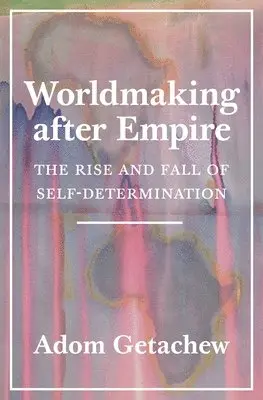
Worldmaking after Empire
- Vikt 0,45 kg
263 krhos Bokus · exkl. frakt
76 kr skillnad mellan billigaste och dyraste butik i lager
Dubbelkollade priser
Jämför 3 butiker
- Bokus, 263 kr, frakt enligt butiken. Till butik (öppnas i ny flik)
I lagerFrakt: se butikenDubbelkollad 18:51
263 kr
Lägst
- Akademibokhandeln, 339 kr, frakt enligt butiken. Till butik (öppnas i ny flik)
I lagerFrakt: se butikenDubbelkollad 19:19
339 kr
- Adlibris, 345 kr, frakt enligt butiken. Till butik (öppnas i ny flik)
Slut i lagerFrakt: se butikenDubbelkollad 27 okt. 09:10
345 kr


Priser från butikernas flöden kan ha ändrats: det är priset hos butiken som gäller, så kontrollera det innan du handlar.
Prishistorik
Köp nu eller vänta?
Just nu kostar produkten 263 kr — 5 kr över det lägsta vi sett på 1 månad.
Under den tiden har det oftast legat runt 260 kr.
Pris idag
263 kr
- Lägst
- 258 kr
- Snitt
- 275 kr
- Högst
- 428 kr
| 2026-09-15 | 428 kr · Lägst hos Adlibris |
|---|---|
| 2026-09-18 | 339 kr · Lägst hos Akademibokhandeln |
| 2026-09-19 | 258 kr · Lägst hos Bokus |
| 2026-09-21 | 259 kr · Lägst hos Bokus |
| 2026-09-26 | 261 kr · Lägst hos Bokus |
| 2026-10-02 | 263 kr · Lägst hos Bokus |
| 2026-10-05 | 265 kr · Lägst hos Bokus |
| 2026-10-09 | 263 kr · Lägst hos Bokus |
| 2026-10-12 | 264 kr · Lägst hos Bokus |
| 2026-10-13 | 263 kr · Lägst hos Bokus |
| 2026-10-16 | 264 kr · Lägst hos Bokus |
| 2026-10-17 | 263 kr · Lägst hos Bokus |
| 2026-10-20 | 262 kr · Lägst hos Bokus |
| 2026-10-23 | 261 kr · Lägst hos Bokus |
| 2026-10-28 | 263 kr · Lägst hos Bokus |
Om produkten
Worldmaking after Empire
Läs merLäs mindre
Decolonization revolutionized the international order during the twentieth century. Yet standard histories that present the end of colonialism as an inevitable transition from a world of empires to one of nations-a world in which self-determination was synonymous with nation-building-obscure just how radical this change was. Drawing on the political thought of anticolonial intellectuals and statesmen such as Nnamdi Azikiwe, W.E.B Du Bois, George Padmore, Kwame Nkrumah, Eric Williams, Michael Manley, and Julius Nyerere, this important new account of decolonization reveals the full extent of their unprecedented ambition to remake not only nations but the world.Adom Getachew shows that African, African American, and Caribbean anticolonial nationalists were not solely or even primarily nation-builders. Responding to the experience of racialized sovereign inequality, dramatized by interwar Ethiopia and Liberia, Black Atlantic thinkers and politicians challenged international racial hierarchy and articulated alternative visions of worldmaking. Seeking to create an egalitarian postimperial world, they attempted to transcend legal, political, and economic hierarchies by securing a right to self-determination within the newly founded United Nations, constituting regional federations in Africa and the Caribbean, and creating the New International Economic Order.Using archival sources from Barbados, Trinidad, Ghana, Switzerland, and the United Kingdom, Worldmaking after Empire recasts the history of decolonization, reconsiders the failure of anticolonial nationalism, and offers a new perspective on debates about today's international order.
Specifikationer
Fakta
- Vikt
- 0,45 kg
- GTIN
- 09780691202341
Uppgifter från tillverkare och butiker.