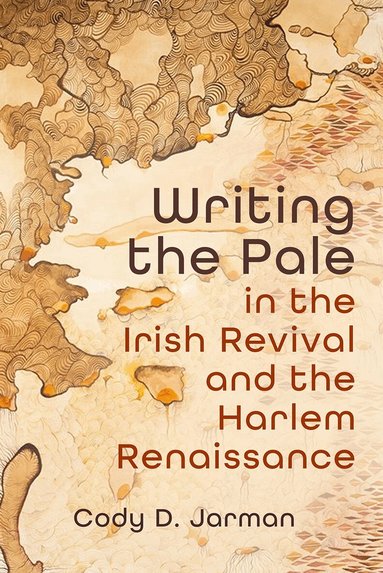
Writing the Pale in the Irish Revival and the Harlem Renaissance
1 037 krhos Bokus · exkl. frakt
312 kr skillnad mellan billigaste och dyraste butik i lager
Dubbelkollat idag
Jämför 2 butiker
- Bokus, 1 037 kr, frakt enligt butiken. Till butik (öppnas i ny flik)
I lagerFrakt: se butikenDubbelkollad 04:51
1 037 kr
Lägst
- Akademibokhandeln, 1 349 kr, frakt enligt butiken. Till butik (öppnas i ny flik)
I lagerFrakt: se butikenDubbelkollad 04:53
1 349 kr

Priser från butikernas flöden kan ha ändrats: det är priset hos butiken som gäller, så kontrollera det innan du handlar.
Prishistorik
Köp nu eller vänta?
Pris idag
1 037 kr
- Lägst
- 1 035 kr
- Snitt
- 1 062 kr
- Högst
- 1 359 kr
| 2026-10-07 | 1 359 kr · Lägst hos Akademibokhandeln |
|---|---|
| 2026-10-08 | 1 043 kr · Lägst hos Bokus |
| 2026-10-09 | 1 040 kr · Lägst hos Bokus |
| 2026-10-11 | 1 038 kr · Lägst hos Bokus |
| 2026-10-12 | 1 035 kr · Lägst hos Bokus |
| 2026-10-16 | 1 039 kr · Lägst hos Bokus |
| 2026-10-17 | 1 038 kr · Lägst hos Bokus |
| 2026-10-18 | 1 037 kr · Lägst hos Bokus |
Om produkten
Writing the Pale in the Irish Revival and the Harlem Renaissance
Läs merLäs mindre
In his groundbreaking work, Cody D. Jarman explores the phrase "beyond the Pale" for describing both the Irish Revival and the Harlem Renaissance. In medieval Ireland, "the Pale" referred to the area immediately surrounding Dublin where the Normans maintained political control. Popular histories of the phrase draw on notions of the native Irish as savage and, thus, to be "beyond the Pale" is to be uncivilized, uncontrollable, and offensive. Jarman suggests a different relationship between the Irish and this construction of civilization as a protected enclave threatened by racial outsiders. In their attempts to project an anticolonial cultural Nationalism, Ireland's revivalists made Irish cultural production into a kind of Pale, a boundary line that reinforced whiteness as a stable political and social identity. This becomes more apparent through an extended comparison with the Harlem Renaissance, a revivalist movement that was made up of artists and thinkers committed to functioning "beyond the Pale." By reimagining the relationship between racial identity and political and cultural belonging, Harlem Renaissance artists constructed a sense of cultural identity that was, simultaneously, cohesive and permeable. Through comparative readings of major figures from each movement and a robust engagement with Black studies theory, Writing the Pale exposes the white supremacist assumptions underlying the Irish Revival's construction of Irish identity, as well as the expansive theoretical implications of the Harlem Renaissance's defense of Black life.